
LVL vs Glulam Beams: Which Engineered Beam Is Right for Your Ontario Build
LVL vs glulam beams, or glulam vs LVL, compared for GTA framing: how each is made, where they outperform, spans and appearance, cost, moisture and exposure, and how to pick the right beam for your project.
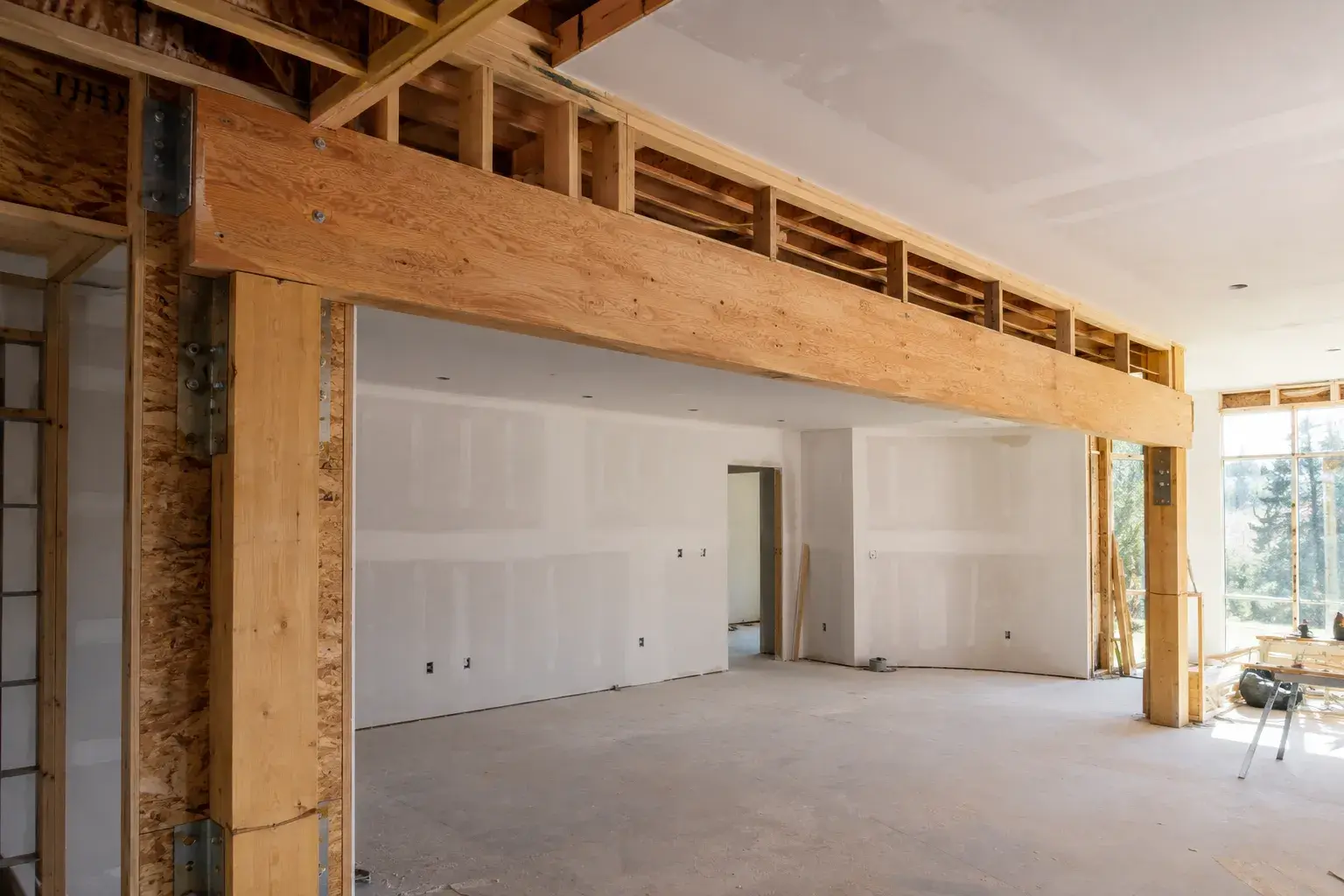
TL;DR: LVL (laminated veneer lumber) and glulam (glue-laminated timber) are both engineered beams that outperform solid lumber, but they solve different problems. Choose LVL for concealed structural beams, headers, and multi-ply built-up beams inside walls and floors where strength and a shallow depth matter and the beam will be hidden. Choose glulam when the beam is exposed and appearance counts, when you need long curved or tapered members, or when a single large section is easier to install than a built-up LVL. Both must be sized to the Ontario Building Code and the manufacturer’s span tables for your specific loads.
LVL and glulam are the two engineered beams builders ask about most, and the choice is not just about strength numbers. It is about where the beam lives, whether anyone will see it, how it gets into the building, and what it costs. Here is how the two compare, using public sources, for Ontario projects.
What Is an LVL Beam?
An LVL beam is laminated veneer lumber: layers of thin wood veneer bonded with structural adhesive and pressed together, with the veneers running in the same direction. Natural Resources Canada says LVL is used for headers, beams and rafters, that its most common thickness is 45 mm (1 3/4 inches), and that wider beams are made by fastening plies together. LVL is a proprietary product, so sizes and design values are specific to each manufacturer.
How Each Beam Is Made
The manufacturing method drives everything about how these beams behave.
- LVL (laminated veneer lumber) is built from thin wood veneers peeled from logs and glued together with all the grain running the same direction along the length of the beam. The result is a dense, uniform, straight member with predictable strength. LVL is usually 1 3/4 inches thick and comes in a range of depths that varies by manufacturer, so wider beams are built up from two, three, or more plies fastened together.
- Glulam (glue-laminated timber) is built from dimensional lumber laminations, typically 38 mm boards, stacked flat and glued into a solid beam of almost any width and depth. Because the laminations are bent before gluing, glulam can be manufactured straight, cambered, curved, or tapered. It arrives as one solid piece rather than a built-up stack.
Both are true engineered products with tested, published capacities. Neither twists, cups, or shrinks the way a solid sawn timber does as it dries, which is the core reason we reach for them over old-growth solid beams.
Strength, Span, and Depth
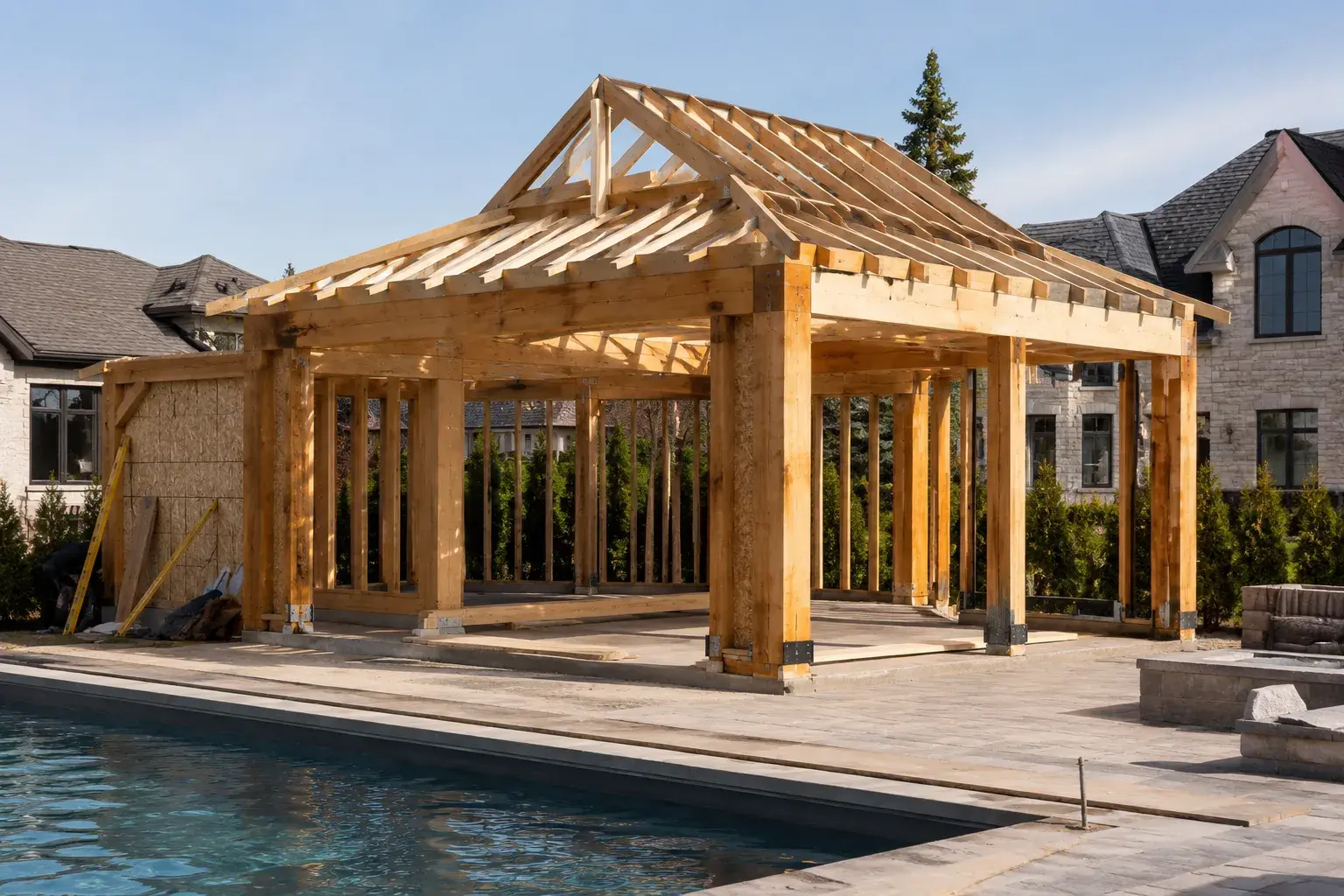
For a concealed beam of a given depth carrying a given load, LVL usually offers the highest strength for the least depth. That matters when a beam has to fit inside a floor system or above a wide opening without dropping below the ceiling line. A multi-ply LVL beam is often the shallowest way to carry a heavy point load, which is why it dominates structural beam installation on renovations where headroom is tight.
Glulam competes on long spans and large single sections. Because it can be manufactured in almost any width and depth and shipped as one piece, glulam is efficient for long clear spans over great rooms, garages, and exposed ridge beams. When a beam has to be curved or tapered, glulam is the only realistic wood option.
| Factor | LVL | Glulam |
|---|---|---|
| Strength for a given depth | Very high, usually highest | High |
| Available widths | Fixed ply width, built up | Almost any width |
| Curved or tapered shapes | No | Yes |
| Delivered as | Multiple plies, assembled on site | One solid piece |
| Best concealed application | Headers, floor beams, point loads | Long single spans |
| Best exposed application | Rarely (industrial look) | Great rooms, ridge beams |
Treat depth and span as a design outcome, not a rule of thumb. Every beam has to be sized against the current OBC and the product’s span tables for your exact live and dead loads, spacing, and support conditions. For anything carrying real load, that sizing should be signed off by the beam supplier’s engineering or a structural engineer, which we cover in our guide to engineered lumber.
Appearance and Where the Beam Lives
This is often the deciding factor. Ask one question first: will anyone see the beam?
- Concealed beam (inside a wall, above a ceiling, buried in a floor): LVL almost always wins. It is stronger for its depth, cheaper for hidden work, and its plain industrial edges do not matter when they are covered by drywall. Built-up LVL is the standard header and dropped-beam material.
- Exposed beam (a feature over an open living space, an exposed ridge, a timber-look great room): glulam wins. It reads as a clean, solid timber, takes stain and finish well, and does not show the nailed-together seams of a multi-ply LVL. If the beam is part of the room’s look, glulam is worth the premium. If you are unsure which applies, contact us with the room and span and we will point you to the right beam type before you order.
Many houses use both: LVL for the hidden headers and floor beams, glulam for one exposed beam. That pairing is common in custom home framing with an open great room. The same choice comes up whenever a bearing wall comes out, for example in Georgetown load-bearing wall removal.
What Is Architectural Grade Glulam?
Architectural grade glulam is a beam finished for appearance where people will see it. APA describes four appearance classes, Premium, Architectural, Industrial and Framing, and says they are cosmetic: a beam’s strength comes from its layup and lumber grades, not its appearance class. Canadian suppliers may use different grade names, so ask what finish a quote includes and specify the finish for any visible beam.
Cost
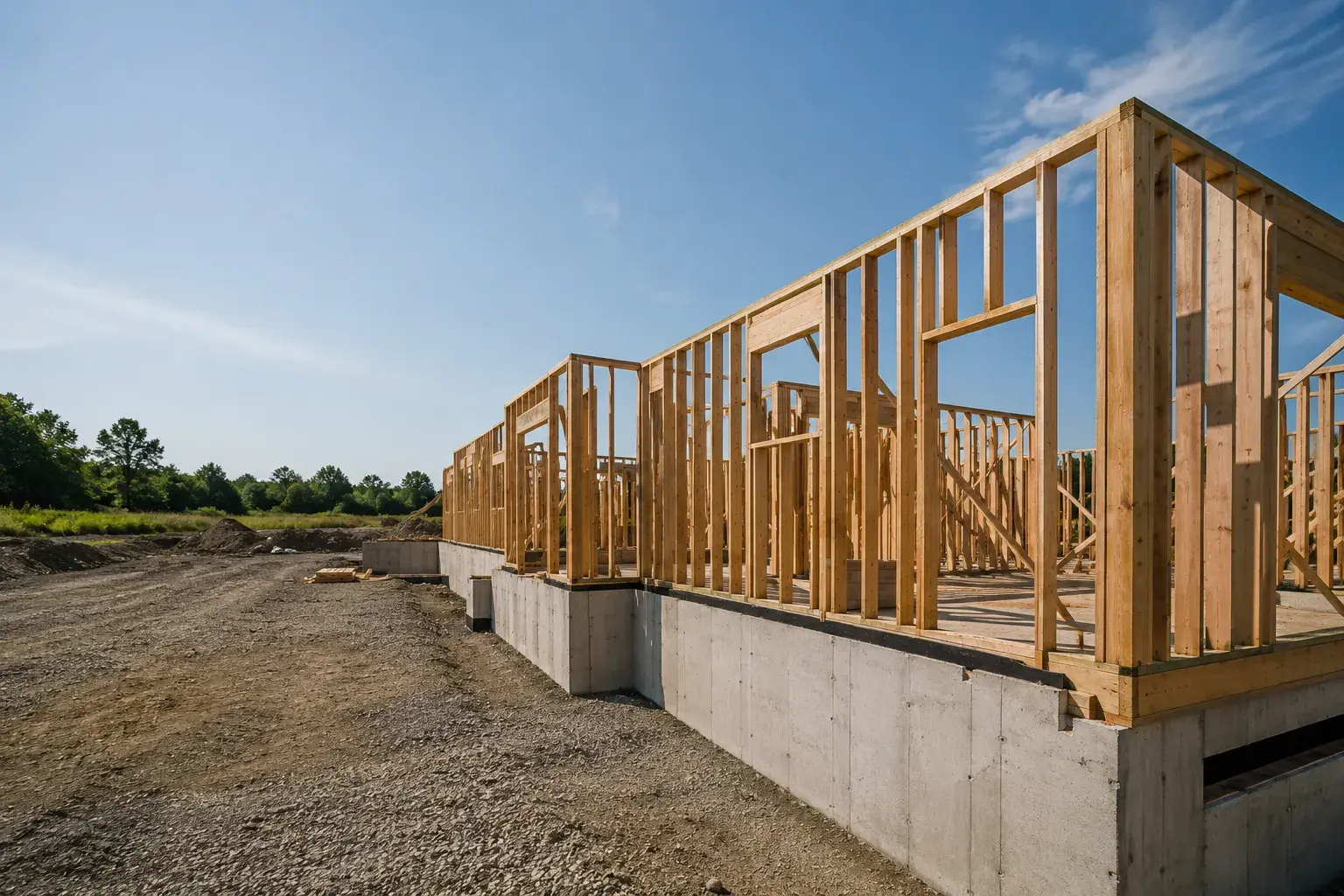
Per foot of comparable capacity, LVL is usually the more economical engineered beam, especially for concealed work, because it uses veneer efficiently and installs as standard plies. Glulam typically costs more, and custom shapes, long lengths, and appearance-grade finishes push that higher. But cost is not just the beam. A very long or very heavy single glulam can need a crane or extra labour to fly into place, while a built-up LVL can sometimes be carried in ply by ply and assembled in position. On tight urban lots common in the GTA, access can quietly decide the cheaper option. To compare options for your own opening, send us the span and the drawings and ask for a written quote.
Moisture and Exposure
Glulam and LVL are bonded with waterproof adhesive, but the wood still takes up water, and neither should be left unprotected in weather or in ground contact. If a beam will see moisture, a covered porch, an exposed exterior header, or a beam near grade, you need the manufacturer’s written confirmation of the exposure the product is rated for, with the treatment or sealer it requires, and the connections and flashing have to keep water off the end grain. Do not substitute an interior-use beam into an exposed location, and do not assume a moisture resistant glulam beam can be left unprotected. For exterior structure such as deck and porch framing, the beam, its bearing, and its protection from water all have to be detailed for the outdoor condition.
How We Choose on a Real Job
A sound decision runs like this:
- Is the beam exposed? If yes, and appearance matters, lean glulam. If no, lean LVL.
- How deep can the beam be? If headroom is tight, LVL gives the most capacity for the least depth.
- Is it curved, tapered, or a very long single span? That points to glulam.
- How does it get into the building? Tight access can favour a built-up LVL assembled in place; open access can favour a single glulam.
- What does the engineer or supplier size say? The final section is confirmed against the OBC and the manufacturer’s tables for your loads, not chosen by feel.
Frequently Asked Questions
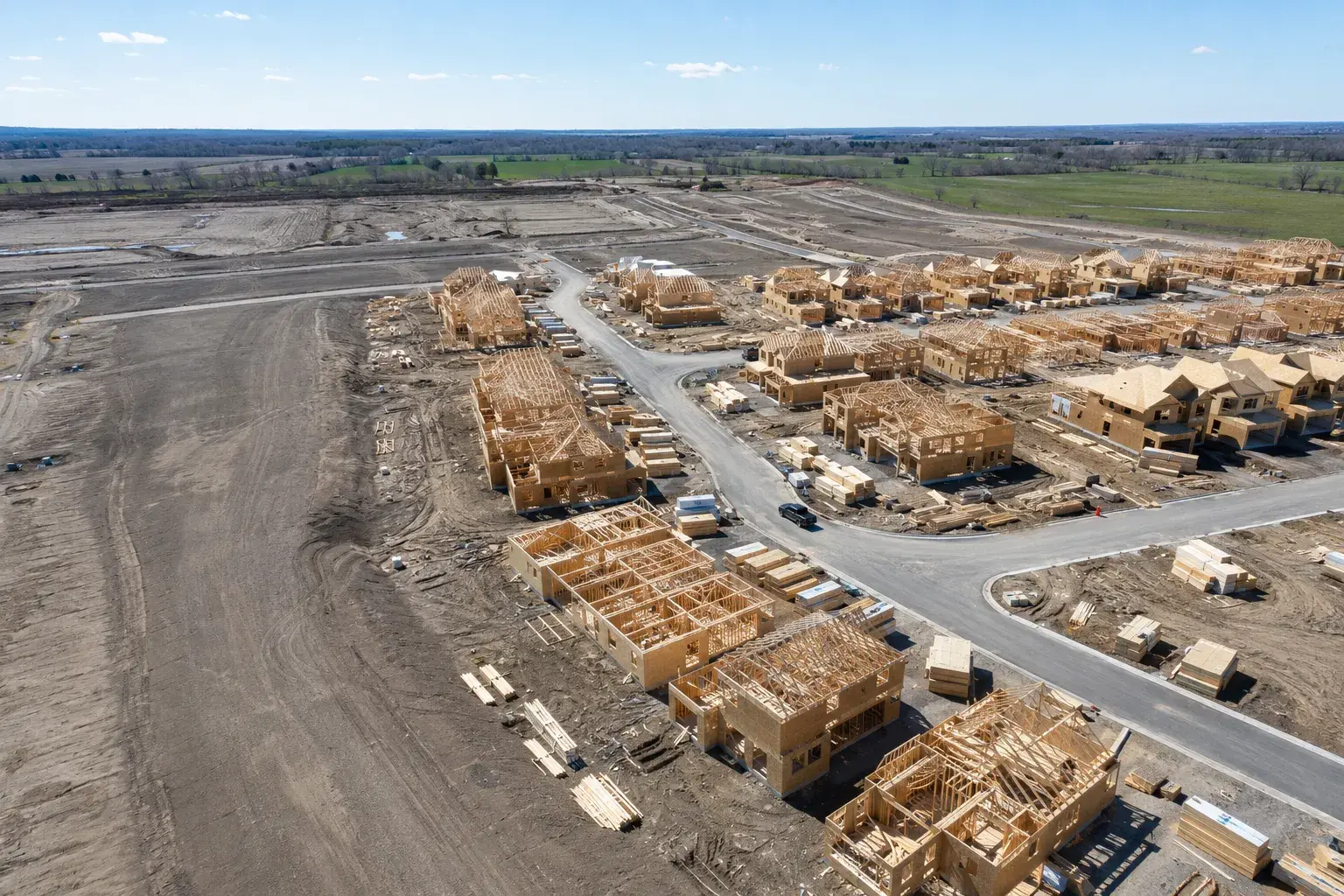
Is LVL stronger than glulam? For a given depth, LVL typically offers the highest strength, which is why it is favoured for shallow, heavily loaded, concealed beams. Glulam is still very strong and wins on long single spans, large sections, and any curved or tapered shape. Neither is universally stronger; the right choice depends on the application, and both must be sized to the Ontario Building Code and the manufacturer’s tables.
Can I use LVL as an exposed beam? You can, but multi-ply LVL shows nailed or bolted seams and reads as an industrial product rather than a finished timber. For a feature beam people will look at, glulam or a wrapped assembly usually looks far better. If the LVL will be hidden by drywall, appearance does not matter.
Which beam is cheaper, LVL or glulam? For concealed structural work, LVL is usually more economical per foot of capacity. Glulam generally costs more, especially in appearance grade or custom shapes, but a single glulam can sometimes save labour compared with assembling a heavy multi-ply LVL, and installation access can change the math.
Do engineered beams need a structural engineer? Any beam carrying real load, such as a beam replacing a bearing wall or spanning a wide opening, should be sized by the supplier’s engineering or a structural engineer and confirmed against the OBC. A licensed framer installs to that spec; we do not guess beam sizes on load-bearing work.
Get the Right Beam Specified and Installed
Choosing between LVL and glulam is a design decision, and installing either correctly, bearing, connections, and support posts down to solid footings, is where the load actually gets carried. If you are planning a build, an addition, or a wall removal anywhere in the GTA or the Golden Horseshoe, Timberr Framing will help you pick the right beam and install it to plan and the Ontario Building Code. We are licensed, insured, and WSIB-covered. Reach out through our contact page to talk through your beam and get a quote; for a wall removal, see how structural beam installation fits the job.
Frequently asked questions
Is LVL stronger than glulam?
For a given depth, LVL typically offers the highest strength, which is why it suits shallow, heavily loaded, concealed beams. Glulam is still very strong and wins on long single spans, large sections and curved or tapered shapes. Neither is universally stronger, and both must be sized to the Ontario Building Code and the manufacturer's tables.
What is an LVL beam?
An LVL beam is laminated veneer lumber: layers of thin wood veneer bonded with waterproof structural adhesive and pressed together with the grain running the same way. Natural Resources Canada says the most common thickness is 45 mm (1 3/4 inches) and that wider beams are made by fastening plies together. It is mostly used as a concealed header or beam.
What is architectural grade exposed glulam?
It is a glulam beam finished for appearance where it will be seen. APA, the engineered wood association, describes Premium, Architectural, Industrial and Framing appearance classes, and says these are cosmetic and do not change the beam's strength, which comes from its layup and lumber grades. Canadian suppliers may name their grades differently, so ask what finish the quote includes.
Are there moisture resistant glulam beams?
Glulam is bonded with waterproof adhesive, but the wood itself still absorbs water, so an exposed beam needs the supplier's recommended treatment, sealer, flashing and a detail that keeps water off the end grain. Ask the manufacturer in writing what exposure the product is rated for before it goes on a porch or exterior frame.
Which beam is cheaper, LVL or glulam?
For concealed structural work, LVL is usually more economical per foot of capacity. Glulam generally costs more, especially in appearance grade or custom shapes, but a single glulam can sometimes save labour compared with assembling a heavy multi-ply LVL, and access can change the comparison.
Do engineered beams need a structural engineer?
A beam carrying real load, such as one replacing a bearing wall or spanning a wide opening, should be sized by the supplier's engineering or a structural engineer and confirmed against the Ontario Building Code. Do not guess beam sizes on load-bearing work.